




LinkedIn will now allow third-party platforms to show its ID verification markers, as a way to broaden identification to extra net parts.
Which could possibly be a great way to solidify skilled connections and relationships, by including an additional layer of assurance throughout the course of.
Initially launched in 2023, LinkedIn’s free ID affirmation course of makes use of third-party suppliers to verify a customers’ id, which then allows these customers to show a affirmation tick within the app.
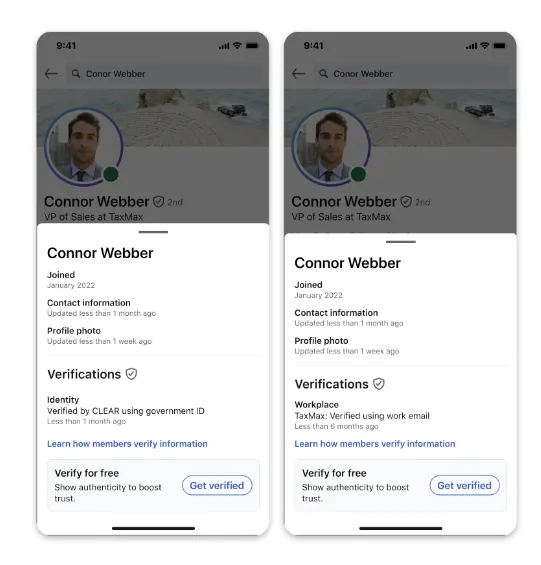
With this, all customers are in a position to affirm that they’re certainly who they are saying, versus superstar or paid verification checkmarks in different apps.
LinkedIn’s been increasing the choice to extra areas, in partnership with native ID verification suppliers. And now, it’s additionally enabling companion platforms to show its ID verifications in their very own apps.
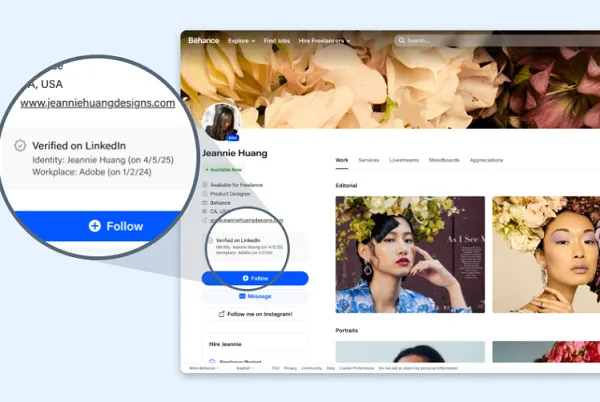
As you’ll be able to see on this instance, Adobe is now integrating LinkedIn ID into its listings, increasing the worth of LinkedIn’s verification, whereas additionally eliminating the necessity for Adobe to ascertain its personal verification course of.
As reported by The Verge:
“Adobe is integrating LinkedIn verification into its new Content material Authenticity app and present Behance portfolio platform, permitting creators who’ve gone by means of LinkedIn’s verification to show a “Verified on LinkedIn” badge on their profiles. If verified creators use Adobe’s digital Content material Credentials instruments, their id may also seem alongside their work every time it’s shared on LinkedIn.”
Which could possibly be a precious replace.
LinkedIn says that over 80 million of its members have undertaken its voluntary ID affirmation course of, and that increasing community of verified, ID-checked profiles might assist to higher hyperlink on-line identities to actual individuals, in an effort to fight spam, bot farming, and impersonation.
Many have lengthy known as for common verification in social apps, in an effort to higher implement behavioral guidelines, by making individuals extra answerable for what they are saying. However anonymity can be a key consideration for a lot of customers, and to date, there’s been little motion on attempting to implement legal guidelines requiring person ID.
However initiatives like this present an alternate, and given its skilled focus, you’ll be able to see why LinkedIn members can be extra eager to indicate that they’re actual individuals, in an effort to assist safe enterprise relationships.
However it additionally reveals that common ID verification is feasible, through the use of third-party companions.
Perhaps that’s a path for regulators to contemplate, which might finally result in a type of ID being required for all social media accounts.
Alongside the identical line, LinkedIn can be planning to broaden its assist for Adobe’s “Content material Credentials”, which allows creators to connect possession over content material through metadata embedded into it.
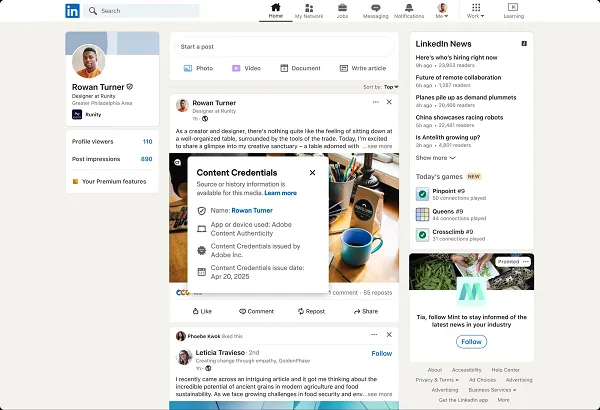
Together, these new types of ID verification and digital possession might add one other layer of assurance to the broader net.
And within the age of enhancing AI fakes, that is set to be a subject of great focus.
